
Newly released
This book is new and will be uploaded as soon as it becomes available to us and if we secure the necessary publishing rights.
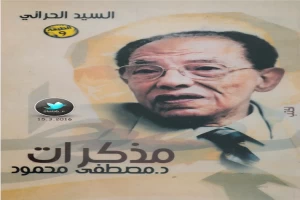
مذكرات مصطفي محمود PDF - Mustafa Mahmoud
Mustafa Mahmoud • Diary • 288 Pages
(0)
Quate
Review
Save
Share
Book Description
Mustafa Mahmoud
Mustafa Mahmoud is one of the most influential Egyptian and Arab intellectual figures of the twentieth century, remembered as a physician, author, philosopher, television presenter, and public thinker whose work brought together science, faith, literature, and existential inquiry. Born Mustafa Kamal Mahmoud Hussein in 1921, he studied medicine and worked as a doctor, specializing in chest diseases, before becoming widely known for his prolific writing and for his ability to translate complex scientific, philosophical, and spiritual questions into clear, accessible language. Mustafa Mahmoud’s reputation rests not only on the number of books he wrote, but also on the unusual range of his interests: he wrote about religion, doubt, belief, physics, the human body, psychology, social change, ethics, political life, and the inner struggles of modern humanity. His most famous work, “My Journey from Doubt to Faith,” became a landmark in Arabic intellectual literature because it framed belief not as an inherited slogan, but as the result of questioning, reflection, intellectual honesty, and a long personal search for meaning. In that book and in others such as “Dialogue with My Atheist Friend,” “God and Man,” “The Qur’an: An Attempt at a Modern Understanding,” “I Saw God,” and “Einstein and Relativity,” he explored the tension between materialist explanations of life and the spiritual hunger that he believed remained at the core of the human condition. His writing style is direct, reflective, and often dramatic; he uses examples from science, everyday life, and personal observation to make abstract ideas feel immediate and emotionally relevant. For readers interested in Arabic nonfiction, Islamic thought, popular science, and modern spiritual literature, Mustafa Mahmoud remains a central figure because he helped create a bridge between the educated public and subjects that might otherwise have seemed remote or difficult. His television program “Science and Faith” gave him an even broader audience, turning him into a familiar voice in Arab households for decades. Through the program, he presented scientific wonders related to the universe, nature, biology, animals, medicine, and technology, then connected those wonders to reflections on divine wisdom, order, and human responsibility. The program’s success came from its distinctive combination of documentary curiosity, spiritual contemplation, and calm explanation, and it helped shape the way generations of viewers thought about science as a path to wonder rather than as a purely mechanical body of facts. Mustafa Mahmoud also wrote fiction, plays, essays, and social criticism, showing that his literary identity was not limited to religious or scientific topics. His stories and dramatic writings often reveal a concern with moral conflict, alienation, freedom, class tension, and the search for authenticity in a rapidly changing society. He was not a conventional preacher, nor was he a narrowly academic philosopher; his appeal came from his restless questioning and from his willingness to speak to ordinary readers without reducing the seriousness of the issues he addressed. His legacy also includes charitable and social work associated with the mosque and foundation bearing his name in Cairo, which strengthened his public image as a figure who linked thought with service. Although some of his views generated debate, his importance in Arab cultural history remains substantial. Mustafa Mahmoud continues to be read because his books speak to readers who are trying to reconcile reason with faith, science with spirituality, and personal doubt with the desire for certainty. As an author biography, his name stands for a distinctive blend of medical knowledge, literary craft, philosophical curiosity, and a deep commitment to making knowledge meaningful for the widest possible audience.
Book Currently Unavailable
This book is currently unavailable for publication. We obtained it under a Creative Commons license, but the author or publisher has not granted permission to publish it.
Rate Now
5 Stars
4 Stars
3 Stars
2 Stars
1 Stars
مذكرات مصطفي محمود Quotes
Top Rated
Latest
Quate
Be the first to leave a quote and earn 10 points
instead of 3
'%20/%3e%3c/svg%3e "اكذوبة اليسار الاسلامى")
Comments
Be the first to leave a comment and earn 5 points
instead of 3