
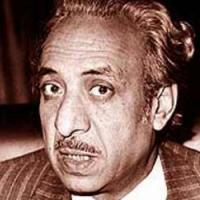
Salah Abdel Sabour Books PDF
(0)
Books number: 0
Explore all available books and works by Salah Abdel Sabour , including popular novels, complete collections, and translated titles. This page is regularly updated with new releases and featured works.
Salah Abdel Sabour (1931–1981) was one of the most influential Egyptian poets, playwrights, and literary critics of the twentieth century. Widely regarded as a pioneer of modern Arabic free verse, he played a central role in transforming contemporary Arabic poetry by introducing innovative forms of expression while preserving the richness of the Arabic literary tradition. His works are celebrated for their philosophical depth, emotional intensity, and exploration of existential questions, making him one of the defining voices of modern Arabic literature.
Born on May 3, 1931, in the city of Zagazig, Egypt, Abdel Sabour developed an early passion for literature, philosophy, and the arts. He studied Arabic language and literature at Cairo University, graduating in the early 1950s. During his university years, he became deeply interested in both classical Arabic poetry and Western literary movements, drawing inspiration from writers such as T. S. Eliot, Federico García Lorca, and existentialist philosophers. This combination of Eastern literary heritage and Western modernism shaped his distinctive poetic voice.
Salah Abdel Sabour emerged as one of the leading figures of the Arabic free verse movement, which revolutionized Arabic poetry during the mid-twentieth century. Unlike traditional Arabic poetry, which relied heavily on fixed meters and rhyme schemes, free verse allowed poets greater flexibility in rhythm and structure. Abdel Sabour used this freedom to express complex emotions, philosophical reflections, and social concerns with remarkable originality. His poetry often examined themes such as alienation, love, mortality, freedom, injustice, spiritual struggle, and the search for meaning in a rapidly changing world.
His first poetry collection, People in My Country (Al-Nas fi Biladi), published in 1957, established him as a major literary voice. The collection departed from conventional poetic forms and offered vivid portrayals of ordinary people while reflecting the social and political realities of modern Egypt. It was praised for its innovative language and emotional sincerity, helping to define a new generation of Arabic poetry.
Throughout his career, Abdel Sabour published several highly regarded poetry collections, including I Say to You, Dreams of the Ancient Knight, Meditations in a Wounded Time, and The Tree Speaks. These works reveal his remarkable ability to blend lyrical beauty with philosophical inquiry. His poems rarely provide simple answers; instead, they invite readers to contemplate life's contradictions and the complexities of human existence.
Beyond poetry, Salah Abdel Sabour was an accomplished playwright whose verse dramas are considered milestones in modern Arabic theatre. His most famous play, The Tragedy of Al-Hallaj, dramatizes the life of the celebrated Sufi mystic Mansur Al-Hallaj. Through this historical figure, Abdel Sabour explored themes of spiritual freedom, political oppression, sacrifice, and the conflict between individual conscience and institutional authority. The play remains one of the most important works in Arabic poetic drama and continues to be studied and performed throughout the Arab world.
His other dramatic works, including The Princess Waits, After the King Dies, and The Traveler by Night, further demonstrate his ability to combine poetic language with symbolic storytelling. These plays often employ allegory and metaphor to address universal questions about power, justice, identity, and the human condition. Their timeless themes have allowed them to remain relevant decades after they were written.
In addition to his creative writing, Abdel Sabour held numerous cultural and administrative positions. He worked as a journalist, editor, translator, and cultural official, contributing significantly to Egypt's literary institutions. He also served as the chairman of the Egyptian General Book Organization, where he supported publishing initiatives and promoted literary culture across Egypt. His essays and literary criticism reveal his deep commitment to artistic excellence and intellectual freedom.
One of Abdel Sabour's greatest achievements was his ability to bridge tradition and modernity. While embracing new poetic forms, he never rejected the rich heritage of classical Arabic literature. Instead, he reinterpreted traditional themes, symbols, and linguistic beauty through a modern philosophical perspective. This balance earned him admiration from both traditional scholars and progressive writers.
His influence extends far beyond Egypt. Salah Abdel Sabour is regarded as one of the foundational figures of modern Arabic literature, and his works have been translated into numerous languages, introducing international readers to the richness of contemporary Arabic poetry. Scholars continue to study his contributions to poetry, theatre, literary criticism, and cultural thought, recognizing him as a writer whose work transcends national boundaries.
Sadly, Salah Abdel Sabour passed away on August 13, 1981, at the age of fifty. Although his life was relatively short, his literary legacy remains extraordinary. His poems and plays continue to inspire readers, writers, students, and scholars across the Arab world and beyond. His exploration of humanity's deepest questions—faith, justice, suffering, hope, and the pursuit of truth—ensures that his work remains both relevant and timeless.
Today, Salah Abdel Sabour is remembered not only as a pioneering poet but also as a visionary intellectual who reshaped modern Arabic literature. His innovative approach to poetry, his profound dramatic works, and his unwavering dedication to cultural development have secured his place among the greatest literary figures in the history of Arabic letters. His writings continue to encourage readers to reflect on the complexities of life, making his voice as powerful and meaningful today as it was during his lifetime.