
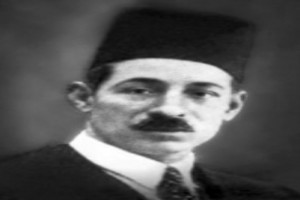
Mustafa Sadiq Al-Rafi'i Books PDF
(0)
Books number: 18
Explore all available books and works by Mustafa Sadiq Al-Rafi'i , including popular novels, complete collections, and translated titles. This page is regularly updated with new releases and featured works.
Mustafa Sadiq Al-Rafi'i is one of the most distinguished figures of modern Arabic literature, an Egyptian writer, poet, critic, and essayist whose name remains closely associated with eloquence, classical Arabic prose, literary dignity, and the defense of cultural identity. His work occupies an important place in the history of Arabic writing because he represented a powerful bridge between the inherited beauty of classical expression and the intellectual concerns of the modern age. Al-Rafi'i grew up in a family environment shaped by learning, law, religion, and respect for language, and these influences helped form a writer who considered Arabic not merely a tool of communication but a living vessel of faith, civilization, memory, and artistic refinement. His literary voice became known for its density, musical rhythm, moral seriousness, and emotional depth, giving his prose a character that often feels poetic while remaining disciplined, argumentative, and intellectually precise.
Mustafa Sadiq Al-Rafi'i gained lasting recognition through major works that continue to be read by students, scholars, and lovers of Arabic literature. Among his best-known books is “Wahy Al-Qalam,” often translated as “The Inspiration of the Pen,” a collection of literary essays, reflections, stories, and meditations that reveal his mastery of language and his sensitivity to human feeling. The book moves between social observation, spiritual insight, ethical criticism, and artistic beauty, making it one of the central works for readers who want to understand the grandeur of Arabic prose in the twentieth century. His book “I'jaz Al-Qur'an wa Al-Balaghah Al-Nabawiyyah,” or “The Inimitability of the Qur'an and Prophetic Eloquence,” reflects his deep engagement with the linguistic and rhetorical miracle of the Qur'an and with the expressive power of Prophetic speech. He also wrote “Tarikh Adab Al-Arab,” “Under the Banner of the Qur'an,” “Hadith Al-Qamar,” “Letters of Sorrow,” “The Red Cloud,” and “Rose Leaves,” works that show the range of his interests, from literary history and criticism to love, longing, faith, and the defense of tradition.
Al-Rafi'i’s style is notable for its elevated diction, compact sentences, strong imagery, and rhythmic movement. He did not write in a plain journalistic manner, nor did he seek easy popularity through simplification. Instead, he developed a prose style that demands attention and rewards careful reading. His paragraphs often unfold like carefully carved structures, where each word is chosen for sound, meaning, and emotional effect. This made him a central figure for readers who value the expressive resources of classical Arabic and who see literature as a moral and aesthetic calling. His intellectual battles, especially his defense of the Qur'an, classical Arabic, and Arab-Islamic heritage, gave his writing a public significance beyond personal creativity. He engaged with the questions of his era while refusing to separate modernity from linguistic authenticity or cultural continuity.
The personal dimension of Al-Rafi'i’s life also adds depth to his literary legacy. Despite physical difficulty, including his well-known struggle with impaired hearing, he built a vast inner world through reading, contemplation, discipline, and spiritual strength. His life suggests that creative greatness can grow from solitude, patience, and devotion to craft. Today, Mustafa Sadiq Al-Rafi'i remains an essential author for anyone interested in Arabic literary biography, classical Arabic style, Egyptian intellectual history, Islamic literary thought, and the evolution of modern Arabic prose. His writings continue to attract readers because they combine beauty with conviction, emotion with structure, and artistic brilliance with a profound belief in the enduring power of language.
'%20/%3e%3c/svg%3e "Cover of الجمال البائس by Mustafa Sadiq Al-Rafi'i")
69
English
الجمال البائس
Mustafa Sadiq Al-Rafi'i
literature
(0)