
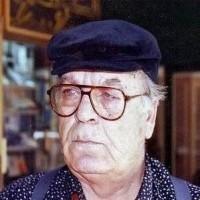
Mohammad Al-Maghut Books PDF
(0)
Books number: 8
Explore all available books and works by Mohammad Al-Maghut , including popular novels, complete collections, and translated titles. This page is regularly updated with new releases and featured works.
Mohammad Al-Maghut was one of the most influential and original literary voices in modern Arabic literature, celebrated as a poet, playwright, journalist, and writer whose works transformed the landscape of contemporary Arabic poetry and drama. Born in 1934 in the town of Salamiyah, Syria, Mohammad Al-Maghut emerged from humble beginnings to become one of the Arab world's most respected literary figures. His writing reflected the struggles, hopes, disappointments, and aspirations of ordinary people, making him a timeless symbol of artistic honesty and intellectual courage. Throughout his career, Mohammad Al-Maghut challenged political oppression, social injustice, and human suffering with a unique blend of poetic sensitivity, sharp satire, and profound emotional depth. His literary legacy continues to inspire readers, writers, scholars, and artists across the Middle East and beyond.
Mohammad Al-Maghut is widely recognized as one of the pioneers of Arabic prose poetry, a literary movement that departed from the strict rhythmic and rhyming traditions of classical Arabic verse. Rather than relying on conventional poetic structures, he embraced free-flowing language that conveyed authentic emotion and vivid imagery. His poems often explored themes of loneliness, exile, poverty, fear, freedom, and the search for dignity in a rapidly changing world. The simplicity of his language made his work accessible to a broad audience, while the philosophical depth and emotional intensity of his writing attracted literary critics and academics. His poetry demonstrated that beauty could emerge from ordinary experiences and that the quiet pain of everyday life deserved a powerful artistic voice.
Growing up in rural Syria profoundly shaped Mohammad Al-Maghut's worldview and literary imagination. The landscapes, traditions, and hardships of village life frequently appeared in his writing, providing vivid settings for reflections on identity and belonging. His early experiences of economic hardship and political uncertainty influenced his lifelong concern for marginalized individuals and those living under oppression. Rather than portraying heroes or historical legends, he focused on ordinary people whose lives reflected the broader realities of Arab society. This human-centered perspective became one of the defining characteristics of his literary style.
Mohammad Al-Maghut's career extended far beyond poetry. He became an acclaimed playwright whose theatrical works combined biting political satire with compelling storytelling. His plays addressed authoritarianism, bureaucracy, corruption, and the contradictions of modern Arab society through memorable characters and witty dialogue. His collaborations with some of the Arab world's most celebrated actors and performers helped bring his ideas to a wider public. These theatrical productions became cultural landmarks because they entertained audiences while encouraging thoughtful reflection about freedom, justice, and human dignity.
In addition to his work in theatre, Mohammad Al-Maghut made significant contributions to Arabic journalism and essay writing. His newspaper columns displayed the same distinctive voice found in his poetry—direct, ironic, compassionate, and intellectually fearless. Through short essays and opinion pieces, he commented on political developments, cultural life, and social change without sacrificing literary elegance. His journalistic writings demonstrated his remarkable ability to transform everyday observations into profound reflections on society and the human condition.
One of the most remarkable qualities of Mohammad Al-Maghut's writing is its emotional honesty. He rarely sought idealized portrayals of life or simplistic solutions to complex problems. Instead, he embraced contradiction, vulnerability, and uncertainty, allowing readers to recognize their own experiences within his words. His poetry frequently balanced sorrow with humor, despair with hope, and anger with compassion. This emotional complexity has enabled his work to remain relevant across generations, as readers continue to discover new meanings in his poems and plays.
Mohammad Al-Maghut also left an enduring influence on younger generations of Arab writers. His innovative approach to language encouraged many poets to experiment with freer forms of expression while maintaining literary quality and emotional authenticity. Scholars frequently study his works within discussions of modern Arabic literature, prose poetry, political satire, and contemporary cultural history. Universities across the Arab world continue to include his writings in literature curricula because they represent a significant turning point in the evolution of Arabic literary expression.
Although much of Mohammad Al-Maghut's writing emerged from the political realities of his time, its appeal extends far beyond specific historical events. His exploration of fear, displacement, longing, identity, love, and human dignity speaks to universal experiences shared by readers from different cultures and generations. His ability to combine lyrical beauty with social criticism remains one of the defining strengths of his literary legacy. Rather than offering direct political slogans, he invited readers to reflect deeply on the human consequences of injustice and the enduring value of freedom.
Mohammad Al-Maghut's influence continues through the ongoing publication, translation, and performance of his works. His poetry collections, theatrical plays, and essays remain widely read throughout the Arabic-speaking world and increasingly attract international scholarly interest. Literary festivals, academic conferences, and cultural institutions continue to celebrate his achievements as one of the greatest modern Arab writers. His commitment to artistic integrity and his unwavering concern for humanity have secured his place among the most respected figures in twentieth-century Arabic literature.
Today, Mohammad Al-Maghut is remembered not only as an extraordinary poet but also as a fearless intellectual whose words gave voice to countless individuals who felt unheard. His literary achievements demonstrate the enduring power of language to challenge injustice, preserve memory, and inspire hope. Through poetry, theatre, journalism, and prose, Mohammad Al-Maghut created a body of work that transcends borders and generations. His writings continue to resonate with readers seeking truth, compassion, and artistic excellence, ensuring that his legacy remains an essential part of both modern Arabic literature and world literary heritage.