
Ahlam Mosteghanemi Books PDF
(0)
Books number: 11
Explore all available books and works by Ahlam Mosteghanemi , including popular novels, complete collections, and translated titles. This page is regularly updated with new releases and featured works.
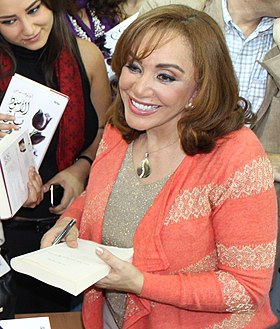
Ahlam Mosteghanemi is an Algerian novelist, poet, and literary figure whose work occupies a distinguished place in modern Arabic literature, especially for readers interested in Arabic fiction, women’s writing, memory, exile, love, and the history of postcolonial Algeria. Born in Tunis during a period marked by the Algerian struggle for independence, she grew up within a family and national atmosphere shaped by displacement, political commitment, and the dream of return. This background became a powerful emotional and intellectual foundation for her writing, giving her novels a rare ability to connect private passion with collective history. She is widely known for writing in Arabic with an intense poetic style, and her name is strongly associated with the renewal of the Arabic novel through language that is lyrical, symbolic, and emotionally charged. Her breakthrough novel, Memory in the Flesh, established her as one of the most important Arabic-language novelists of her generation. The novel turns the body into a metaphor for the wounded homeland and transforms a love story into a meditation on revolution, loss, memory, and betrayal. Through this work and the novels that followed, including Chaos of the Senses, Bed Hopper, and Black Suits You So Well, Mosteghanemi developed a literary universe where love is never merely personal; it is tied to nation, language, history, dignity, and the burdens of memory. Her fiction is often read for its romantic intensity, yet its deeper strength lies in the way it examines the contradictions of the Arab world: the tension between idealism and disappointment, belonging and exile, desire and restraint, liberation and disillusionment. Ahlam Mosteghanemi’s prose is instantly recognizable because it gives each sentence a musical and aphoristic quality, often making her writing memorable beyond the boundaries of the novel itself. She has reached a broad readership while maintaining a serious literary identity, a combination that has made her one of the most widely read Arab authors and a frequent point of reference in discussions of contemporary Arabic literature. Her importance also lies in the way she placed the female voice at the center of historical narration. In her work, women are not passive figures placed inside national history; they are active witnesses, thinkers, lovers, and narrators who question inherited ideas about identity, loyalty, and freedom. This makes her writing particularly significant for readers exploring Arab women’s literature and feminist perspectives in Arabic fiction. At the same time, Mosteghanemi’s novels resist simple classification. They are political without being conventional political novels, romantic without being limited to romance, and poetic without abandoning narrative structure. Her use of Algeria as both a real country and a symbolic landscape gives her books a layered quality: the city, the body, the memory, and the beloved often mirror one another. This ability to merge personal emotion with national trauma explains the lasting influence of her work. She has also written essays and reflective texts that extend her interest in love, forgetting, language, and emotional survival, including works connected to the theme of forgetting and the art of detachment. For book websites, author pages, and literary catalogs, Ahlam Mosteghanemi can be described as a writer who transformed the Arabic novel into a space where history speaks through passion and where memory becomes both a wound and a form of resistance. Her legacy is not only in the popularity of her books, but also in the distinctive voice she created: elegant, intense, wounded, proud, and deeply attached to the Arabic language as a home for identity and beauty.