

مصدر الكتاب
تم نشر هذا الكتاب بهدف النفع العام، وذلك بموجب رخصة المشاع الإبداعي، أو بناءً على موافقة من المؤلف أو دار النشر. في حال وجود أي اعتراض على النشر، يُرجى التواصل معنا لنتخذ الإجراء المناسب.
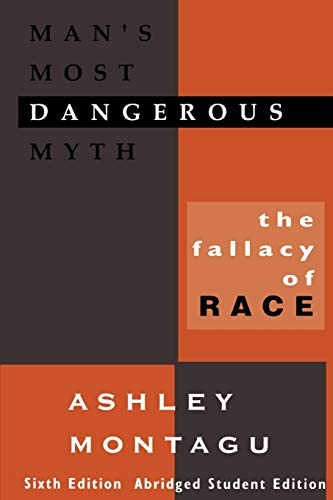
Man's Most Dangerous Myth: The Fallacy of Race PDF - اشلي مونتاجو
اشلي مونتاجو • انثروبولوجيا • ٦٨٠ الصفحات
(0)
المؤلف
اشلي مونتاجوالفئة
علوم اجتماعيةالقسم
عدد التنزيلات
٦٢
عدد القراءات
٢١٥
حجم الملف
3.06 MB
المشاهدات
١٬٤٠٨
اقتباس
مراجعة
حفظ
مشاركة
وصف الكتاب
Man’s Most Dangerous Myth: The Fallacy of Race by Ashley Montagu
Man’s Most Dangerous Myth: The Fallacy of Race by Ashley Montagu is a landmark work in anthropology, race studies, social science, and human rights thought. First published in 1942 by Columbia University Press, the book appeared at a moment when racial ideology had become one of the most destructive political forces of the modern world. A contemporary bibliographic record for the original edition lists it as Man’s Most Dangerous Myth; The Fallacy of Race by M. F. Ashley Montagu, published in New York by Columbia University Press in 1942.
A Powerful Challenge to the Idea of Race
At the heart of Man’s Most Dangerous Myth is Montagu’s argument that “race,” as commonly used to classify human beings into fixed and unequal biological groups, is a misleading and dangerous myth. Rather than treating racial categories as natural divisions that determine intelligence, character, culture, or moral worth, Montagu examines how such ideas are created, defended, and used by societies. The book became known for breaking the assumed link between genetics and culture and for arguing that race is largely a social construction rather than a meaningful basis for deep biological hierarchy among people.
This makes the book essential reading for anyone interested in the fallacy of race, racism, anthropology, race relations, social construction, human equality, and the history of racial thought. Montagu does not simply reject racist conclusions; he questions the very framework that allowed those conclusions to appear scientific. His work asks readers to look carefully at how language, politics, prejudice, and selective science can turn human difference into a rigid system of domination.
Race, Science, and the Misuse of Biology
One of the most important features of Man’s Most Dangerous Myth: The Fallacy of Race is its critique of biological determinism. Montagu examines how claims about inherited racial character, intelligence, aggression, creativity, and civilization have often depended on weak reasoning, cultural bias, and the confusion of social conditions with biological facts. Instead of accepting race as a clear scientific category, he analyzes how physical traits such as skin color, ancestry, and appearance have been exaggerated into broad claims about human worth.
For readers searching for a serious book on race and biology, Montagu’s argument remains significant because it shows how scientific language can be misused when social prejudice guides interpretation. The book is especially valuable for students of anthropology, sociology, history, political science, ethnic studies, and critical race studies who want to understand how ideas of racial hierarchy were challenged from within twentieth-century scholarship. It also speaks to general readers who want to understand why race remains socially powerful even when its biological meaning is deeply contested.
A Book Written Against a Dangerous Historical Background
The historical setting of the book is central to its force. Man’s Most Dangerous Myth was first published during the Second World War, in a period marked by Nazi racial ideology and legally enforced racial segregation in the United States. Later publisher descriptions emphasize that the book appeared when Nazism was flourishing, when African Americans were subjected to segregation, and when many people still treated race as a determinant of intelligence and character.
This background gives Montagu’s work a moral urgency. He was not writing about race as an abstract academic topic detached from real life. He was writing about an idea that had justified slavery, colonialism, segregation, anti-Semitism, exclusion, war, and mass violence. By calling race “man’s most dangerous myth,” Montagu identifies racial thinking as more than an error; he presents it as a social weapon, a false belief capable of organizing fear, hatred, and inequality on a massive scale.
The Social Construction of Race
A central reason the book remains important is its attention to the social construction of race. Montagu argues that racial categories are not neutral descriptions of humanity but social classifications shaped by history, politics, economics, and power. This does not mean that human beings have no physical variation. Rather, it means that the meanings attached to those variations are created by societies, and those meanings can become tools of exclusion, oppression, and inequality.
This distinction is crucial for readers trying to understand modern conversations about racism, ethnicity, identity, racial categories, and social inequality. Montagu’s work helps explain why race can be scientifically unstable yet socially real in its consequences. People may be classified by systems they did not create, and those classifications can affect law, opportunity, education, health, housing, employment, and social belonging. In this sense, the book remains useful because it separates the biological question from the social reality of racism.
Themes and Scope of the Book
The scope of Man’s Most Dangerous Myth is broad and ambitious. Later edition records and tables of contents show that Montagu addresses topics such as the origin of the concept of race, older anthropological ideas about race, genetics, biological facts, natural selection, race and society, race and culture, racism and social action, intelligence, IQ, and race. The sixth edition is listed as a 1997 AltaMira Press publication of 699 pages, with subjects including Race and Race relations.
These topics make the book more than a single argument against prejudice. It is a wide-ranging investigation into how racial ideas are formed, how they persist, and how they can be challenged. Montagu moves between science and society, showing that the problem of race cannot be understood only through biology or only through politics. It requires attention to history, culture, psychology, education, and social institutions.
Why Ashley Montagu’s Argument Still Matters
Although written in the twentieth century, Man’s Most Dangerous Myth: The Fallacy of Race continues to speak to ongoing debates about race, identity, inequality, and public policy. Later descriptions of the revised editions note that the book’s subsequent versions traced changing ideas about race and race relations across the twentieth century, and that the sixth edition addressed topics such as The Bell Curve, IQ testing, ethnic cleansing, and contemporary race relations.
For modern readers, this continuing revision history is important. It shows that Montagu’s argument was not limited to the conditions of 1942. The myth of race changes form over time. It may appear as old-fashioned racial hierarchy, as pseudoscientific claims about intelligence, as cultural essentialism, or as political rhetoric about national, ethnic, or religious identity. Montagu’s work gives readers a framework for recognizing these patterns and questioning the assumptions behind them.
A Valuable Book for Students and General Readers
Man’s Most Dangerous Myth is especially useful for readers looking for a foundational text in anthropology, anti-racism, race relations, human variation, and the critique of racial ideology. Students will find it valuable as a historical document in the development of modern thinking about race. Teachers and researchers may find it useful for understanding how mid-twentieth-century scholars challenged scientific racism. General readers may appreciate the book for its clear moral purpose: to expose the harm caused when human beings are divided into supposedly superior and inferior types.
The book is also relevant for readers interested in how ideas become powerful. Montagu shows that dangerous myths do not survive only because they are true; they often survive because they are useful to institutions, political movements, and social hierarchies. The myth of race has been used to explain inequality as natural, to disguise injustice as science, and to turn cultural difference into permanent human ranking. By challenging that myth, Montagu invites readers to think more carefully about evidence, language, and responsibility.
Reading Experience and Intellectual Value
The reading experience of Man’s Most Dangerous Myth: The Fallacy of Race is serious, challenging, and intellectually engaged. It is not a light popular treatment of prejudice, but a sustained examination of one of the most influential and harmful ideas in modern history. Montagu’s style combines scholarly argument with moral conviction, making the book suitable for readers who want depth rather than simplification.
Because the book has passed through several editions, readers may encounter versions that differ in length, organization, and updated material. A 1974 edition listed by the Internet Archive identifies the book under the topics Race and Race relations, while the later 1997 edition expands the discussion into a large revised work. This edition history reflects the lasting relevance of the subject and the author’s continued effort to respond to changing debates about race.
A Classic Work on Racism, Human Difference, and Equality
Man’s Most Dangerous Myth: The Fallacy of Race by Ashley Montagu remains a classic because it confronts a belief system that has shaped history, politics, science, and everyday life. Its central message is that racial categories, when treated as natural hierarchies of human value, become instruments of distortion and harm. Montagu’s book challenges readers to separate human biological variation from racist mythology, and to recognize the social processes that turn difference into inequality.
For anyone searching for a major book on the fallacy of race, racial myths, scientific racism, anthropology of race, race relations, anti-racist thought, and the social construction of race, this work offers a historically important and intellectually powerful reading experience. It is a book about science, but also about justice. It is a book about classification, but also about human dignity. Above all, it is a warning against one of the most destructive myths human societies have ever created: the belief that race can define the worth, intelligence, character, or destiny of a human being.
اشلي مونتاجو
آشلي مونتاغو، المولود باسم إسرائيل إهرنبرغ في لندن عام 1905 والمتوفى في برينستون عام 1999، يُعد واحدًا من أبرز الأنثروبولوجيين والكتّاب الإنسانيين في القرن العشرين، وقد اشتهر بقدرته النادرة على تحويل البحث العلمي المعقّد إلى خطاب ثقافي واجتماعي مفهوم لجمهور واسع من القراء. ارتبط اسم آشلي مونتاغو بدراسة الإنسان من زاوية تجمع بين الأنثروبولوجيا الجسدية، وعلم الاجتماع، وعلم النفس، والتربية، والفلسفة الإنسانية، ولذلك لا يُقرأ بوصفه عالمًا أكاديميًا فحسب، بل بوصفه مفكرًا عامًا دافع عن كرامة الإنسان وعن فكرة أن المعرفة العلمية يجب أن تُستخدم لمقاومة التعصب والعنصرية والعنف. درس مونتاغو في بريطانيا ثم في الولايات المتحدة، وتأثر بمدارس فكرية كبرى في الأنثروبولوجيا الحديثة، ولا سيما الاتجاه الذي قاوم التفسيرات البيولوجية السطحية للفوارق بين البشر. من أشهر أعماله كتاب «أخطر أسطورة صنعها الإنسان: مغالطة العرق»، وهو من الكتب الأساسية في نقد مفهوم العرق بوصفه أداة أيديولوجية أكثر منه حقيقة علمية صلبة، وفيه قدّم مونتاغو حجة واضحة ضد العنصرية العلمية، مؤكدًا أن الاختلافات البشرية لا تبرر التراتب أو التمييز أو الادعاء بتفوق جماعة على أخرى. كما عُرف بكتابه «التفوق الطبيعي للنساء»، الذي أثار نقاشًا واسعًا لأنه دافع عن قراءة مختلفة للنوع الاجتماعي، محاولًا إظهار أن كثيرًا من الأحكام الشائعة عن النساء والرجال هي أحكام ثقافية موروثة وليست حقائق بيولوجية مطلقة. وكتب أيضًا عن اللمس، والطفولة، والنمو الإنساني، والحب، والعنف، والشيخوخة، والولادة، وطبيعة الإنسان الاجتماعية، مما جعل مشروعه الفكري متشعبًا لكنه متماسك في جوهره: الإنسان لا يكتمل إلا داخل علاقات الرعاية والتواصل والتعلم المتبادل. تميّز أسلوب آشلي مونتاغو بالوضوح والجرأة والقدرة على الجمع بين الاستشهاد العلمي والنبرة الأخلاقية، فكان يكتب للقارئ العام من دون أن يتخلى عن خلفيته البحثية. وقد ساهم في النقاشات الدولية حول العرق بعد الحرب العالمية الثانية، وكان من الأصوات التي شددت على ضرورة تنقية الخطاب العلمي من الأساطير التي غذّت الاستعمار والنازية والتمييز. لم تكن شهرته محصورة في الجامعة، إذ ظهر في الإعلام وشارك في حوارات عامة حول التربية، والعلاقات الأسرية، والاختلاف الثقافي، ومعنى الإنسانية في العصر الحديث. ولذلك تُعد مؤلفاته مناسبة لقراء الأنثروبولوجيا، وتاريخ الأفكار، ودراسات العرق، والنظرية النسوية، وعلم النفس الإنساني، وكل من يبحث عن كاتب يجمع بين المعرفة الموسوعية والالتزام الأخلاقي. إن أهمية آشلي مونتاغو لا تكمن فقط في كتبه المشهورة، بل في موقفه المستمر من الإنسان بوصفه كائنًا قابلًا للتعلم والتعاطف والتطور، لا أسيرًا لحتميات عرقية أو بيولوجية ضيقة. وبفضل هذا المنظور، بقيت كتاباته حاضرة في مكتبات القراء والباحثين، لأنها تناقش أسئلة لا تزال ملحّة: ما معنى أن نكون بشرًا، وكيف نفهم الاختلاف، وكيف نستبدل الخوف من الآخر بفهم علمي وإنساني أعمق.
اكسب مكافآت أثناء القراءة!
كل 10 صفحات تقرؤها وتقضى فيها 30 ثانية تمنحك 5 نقاط مكافأة! واصل القراءة لفتح الإنجازات والمزايا الحصرية.
اقرأ
قيم الآن
5 نجوم
4 نجوم
3 نجوم
2 نجوم
1 نجوم
اقتباسات Man's Most Dangerous Myth: The Fallacy of Race
الأعلى تقييماً
الأحدث
اقتباس
كن أول من يترك اقتباسًا واكسب 10 نقاط
بدلاً من 3
كتب أخرى لـ اشلي مونتاجو
كتب أخرى مشابهة Man's Most Dangerous Myth: The Fallacy of Race
'%20/%3e%3c/svg%3e "Cultural Anthropology: Global Forces, Local Lives, 3rd ed.")
2214
الإنجليزية
التعليقات
كن أول من يترك تعليقًا واكسب 5 نقاط
بدلاً من 3