

مصدر الكتاب
تم نشر هذا الكتاب بهدف النفع العام، وذلك بموجب رخصة المشاع الإبداعي، أو بناءً على موافقة من المؤلف أو دار النشر. في حال وجود أي اعتراض على النشر، يُرجى التواصل معنا لنتخذ الإجراء المناسب.
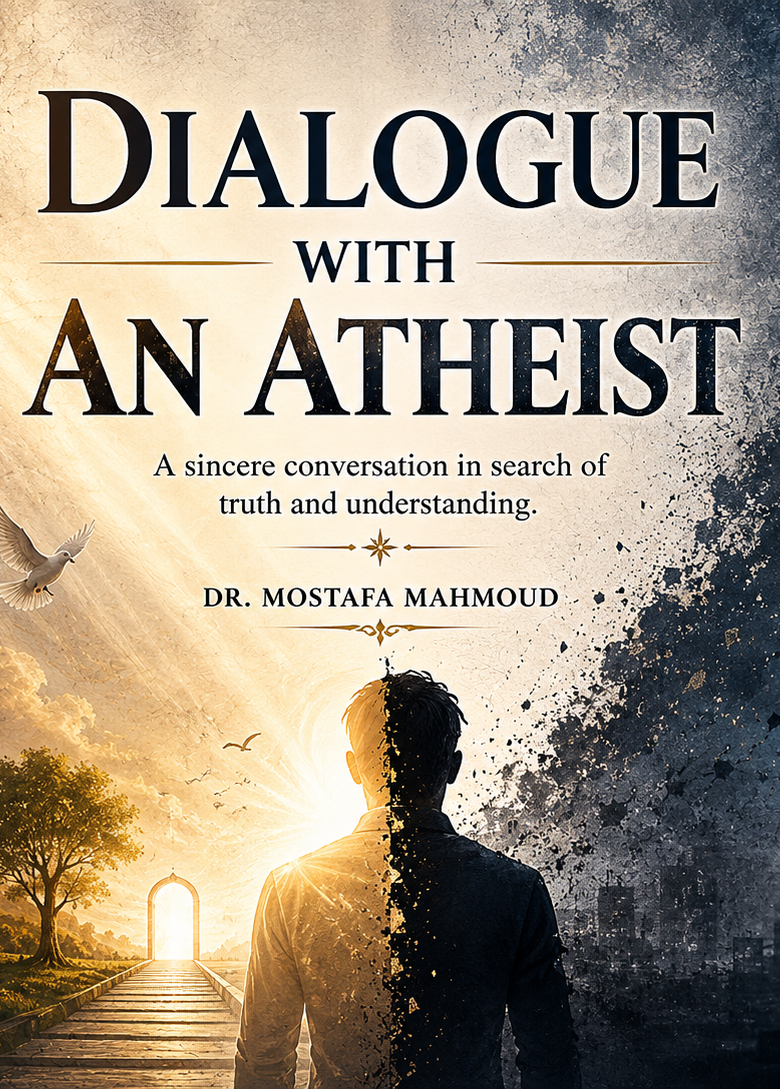
Description of Dialogue with My Atheist Friend PDF - مصطفي محمود
مصطفي محمود • فلسفة • ٩٤ الصفحات
(0)
اقتباس
مراجعة
حفظ
مشاركة
وصف الكتاب
Description of Dialogue with My Atheist Friend by Mustafa Mahmoud
Dialogue with My Atheist Friend by Mustafa Mahmoud is one of the most widely discussed Arabic works on faith, doubt, atheism, and rational inquiry. Originally known in Arabic as the book is built around a direct intellectual conversation between the author and an atheist friend who raises difficult questions about God, religion, creation, destiny, freedom, evil, the afterlife, and the relationship between science and belief. The book is commonly listed among Mustafa Mahmoud’s works on responding to atheistic arguments and exploring Islamic faith through reasoned dialogue.
What makes this book especially memorable is its conversational style. Instead of presenting faith as a closed lecture or a set of abstract doctrines, Mustafa Mahmoud allows the questions to appear openly and sharply. The atheist friend asks what many readers may hesitate to ask: Who created God? Why does evil exist? Is man truly free, or is everything predetermined? How can heaven, hell, resurrection, and divine justice be understood? Through these questions, the book becomes more than a defense of religion; it becomes a thoughtful journey into the human need for meaning, certainty, and intellectual honesty.
A Powerful Book on Faith, Doubt, and Reason
The central strength of Dialogue with My Atheist Friend lies in its ability to treat doubt as a serious human experience. Mustafa Mahmoud does not write as though questioning is always a weakness. Instead, he approaches doubt as a stage that may lead either to confusion or to deeper understanding, depending on how honestly the mind searches for truth. This gives the book a distinctive emotional and intellectual power, especially for readers who are interested in books about belief and atheism, Islam and reason, or philosophical discussions about God.
The book speaks to readers who want answers that are not purely emotional and not overly academic. Mustafa Mahmoud uses examples from daily life, reflections on the order of the universe, observations about human nature, and arguments about consciousness, morality, and responsibility. His method is simple enough for general readers, yet serious enough to invite deeper reflection. This balance is one of the reasons the book continues to attract readers across generations.
The Dialogue Format and Its Appeal
The dialogue structure gives the book a lively rhythm. Each question opens a new door, and each answer leads the reader into a wider discussion about existence, morality, and the limits of human knowledge. Rather than moving through dry theoretical chapters, the book feels like an active debate between two minds. This makes Dialogue with My Atheist Friend especially accessible for readers who may be new to religious philosophy or Islamic thought.
The “atheist friend” in the book functions as more than a single character. He represents a collection of modern objections to religion: skepticism toward unseen realities, suspicion of inherited belief, trust in material explanations, and discomfort with questions of divine justice. Mustafa Mahmoud responds to these objections with a style that combines logic, analogy, spiritual reflection, and literary force. The result is a book that feels direct, personal, and urgent.
Science, Religion, and the Search for Meaning
One of the most important themes in Dialogue with My Atheist Friend is the relationship between science and religion. Mustafa Mahmoud, who was trained as a physician before becoming one of the Arab world’s best-known writers and thinkers, often approached faith through the language of observation, order, and wonder. In this book, he does not present science as an enemy of belief. Instead, he argues that scientific discovery can deepen the sense of mystery and point toward questions that material explanation alone may not fully answer.
The book challenges the idea that the universe can be reduced to matter without meaning. It asks whether consciousness, moral responsibility, beauty, longing, and the search for justice can be fully explained by physical processes alone. For readers interested in Islamic philosophy, arguments for the existence of God, or the limits of materialism, this aspect of the book offers a clear and engaging introduction.
Questions About God, Evil, Freedom, and Destiny
Among the most compelling parts of the book are its discussions of evil, free will, and divine justice. These are not simple topics, and Mustafa Mahmoud does not treat them as minor objections. He recognizes that questions about suffering, inequality, death, and human responsibility are among the deepest questions a person can ask. Through the dialogue, he attempts to show that belief in God does not remove complexity from life, but gives that complexity a larger moral and spiritual framework.
The book also examines the question of destiny. Is man responsible for his actions if God knows everything? How can freedom exist alongside divine knowledge? What does accountability mean in a universe governed by God? These questions make the book valuable not only for readers debating atheism, but also for believers who want to think more deeply about concepts they may have inherited without examination.
Mustafa Mahmoud’s Distinctive Style
Mustafa Mahmoud’s writing style is one of the main reasons Dialogue with My Atheist Friend remains popular. His language is direct, clear, and often intense. He avoids unnecessary complexity, yet he does not weaken the seriousness of the subject. He writes with the energy of someone who has personally wrestled with the questions he discusses, which gives the book an intimate and persuasive tone.
Readers familiar with Mustafa Mahmoud’s other works, such as My Journey from Doubt to Faith, will recognize his recurring concern with the movement from uncertainty to conviction. He is not interested in blind imitation or shallow certainty. Instead, he repeatedly returns to the idea that faith should be conscious, reflective, and alive. In this sense, Dialogue with My Atheist Friend is not only a response to atheism; it is also an invitation to believers to understand what they believe and why.
Who Should Read Dialogue with My Atheist Friend?
Dialogue with My Atheist Friend is suitable for readers interested in religious thought, Islamic belief, philosophy of religion, and books that discuss atheism from an Islamic perspective. It is especially useful for readers who prefer a clear conversational approach rather than a specialized academic study. The book can appeal to young readers beginning to ask existential questions, to believers seeking stronger intellectual grounding, and to anyone interested in how modern Arabic thought has addressed the tension between faith and skepticism.
It is also a meaningful choice for readers who appreciate books that do not avoid difficult questions. The value of the book comes from its willingness to place challenging objections at the center of the discussion. Whether the reader agrees with every argument or not, the book offers a powerful example of how faith can be presented through dialogue rather than silence, fear, or dismissal.
Why This Book Still Matters
The continued relevance of Dialogue with My Atheist Friend comes from the timeless nature of its questions. Human beings continue to ask where the universe came from, why they exist, what happens after death, whether justice has a final meaning, and whether the mind can find peace without faith. These questions have not disappeared; in many ways, they have become even more visible in modern discussions about science, secularism, religion, and identity.
For this reason, the book remains an important title for readers searching for a thoughtful book about faith and atheism, a readable introduction to Islamic responses to doubt, or a philosophical dialogue about God and human existence. It combines intellectual debate with spiritual concern, making it both accessible and thought-provoking.
A Thought-Provoking Work on Belief and the Human Search for Truth
In the end, Dialogue with My Atheist Friend by Mustafa Mahmoud is a book about more than argument. It is about the human struggle to understand existence, the courage to ask difficult questions, and the possibility that sincere doubt can become the beginning of a deeper journey toward faith. Through its sharp questions, clear answers, and reflective style, the book offers a memorable reading experience for anyone interested in the meeting point between reason, religion, science, and the search for meaning.
It remains one of Mustafa Mahmoud’s most influential works because it does not treat belief as a passive inheritance, but as a living question that must be examined, understood, and renewed. For readers seeking a clear, engaging, and intellectually serious exploration of faith versus atheism, this book continues to offer a powerful entry point into one of the most important conversations in modern religious thought.
مصطفي محمود
مصطفى محمود هو أحد أبرز الأسماء في الثقافة العربية الحديثة، وطبيب وكاتب ومفكر مصري ارتبط اسمه بالبحث العميق في العلاقة بين العلم والإيمان، وبالكتابة التي تجمع بين التأمل الفلسفي واللغة الأدبية الواضحة والاهتمام بأسئلة الإنسان الكبرى. وُلِد مصطفى كمال محمود حسين عام 1921 في مصر، ودرس الطب وتخصّص في الأمراض الصدرية، غير أن شهرته الواسعة لم تأت من العيادة الطبية وحدها، بل من قدرته على تحويل المعرفة العلمية والخبرة الإنسانية إلى خطاب ثقافي مؤثر وصل إلى القراء والمشاهدين في أنحاء العالم العربي. عُرف مصطفى محمود بأسلوبه القريب من القارئ، فهو لا يكتب بلغة أكاديمية مغلقة، ولا يقدّم الأفكار الفلسفية في صورة مجردة بعيدة، بل يصوغها في أسئلة حية تتصل بالوجود، والروح، والضمير، والحرية، والموت، والعدالة، ومعنى الإيمان، ومكان الإنسان في الكون. وقد أصبح كتابه الشهير «رحلتي من الشك إلى الإيمان» من أكثر كتبه حضوراً في الذاكرة العربية، لأنه يقدّم تجربة فكرية وشخصية يتتبع فيها مسار القلق والسؤال والبحث عن اليقين، من دون أن يفصل الفكر عن التجربة أو العقل عن الوجدان. كما تُعد كتبه «حوار مع صديقي الملحد»، و«الله والإنسان»، و«القرآن: محاولة لفهم عصري»، و«رأيت الله»، و«أينشتين والنسبية» من الأعمال التي تكشف تنوع اهتماماته بين الدين والفلسفة والفيزياء والطب والأدب والاجتماع. لم يكن مصطفى محمود مجرد مؤلف يكتب في موضوع واحد، بل كان صاحب مشروع ثقافي واسع يقوم على تبسيط المعرفة، وتشجيع التفكير، وربط العلوم الحديثة بالأسئلة الروحية والأخلاقية. وازدادت شهرته الجماهيرية من خلال برنامجه التلفزيوني «العلم والإيمان»، الذي أصبح علامة مميزة في الإعلام العربي، إذ قدّم عبره موضوعات علمية عن الكون والطبيعة والإنسان والحيوان والظواهر المدهشة، ثم ربطها بتأملات إيمانية وفلسفية تجعل العلم طريقاً إلى الدهشة لا إلى الجفاف. وقد تميز حضوره التلفزيوني بصوت هادئ، وطريقة شرح متأنية، وقدرة على مخاطبة الأسرة العربية بأكملها، فصار برنامجه مرجعاً شعبياً للمعرفة العلمية المبسطة. أما في الأدب، فقد كتب القصة والرواية والمسرح والمقال، وامتلك حساً سردياً واضحاً يجعله قادراً على تحويل الفكرة إلى مشهد، والسؤال إلى حكاية، والتأمل إلى تجربة إنسانية. وتظهر في أعماله نزعة أخلاقية قوية، واهتمام بمصير الفرد في مجتمع متغير، ونقد للمادية الجافة حين تنفصل عن القيم، مع إصرار على احترام العقل وعدم الاكتفاء بالتقليد. أسّس مصطفى محمود أيضاً حضوراً اجتماعياً وخيرياً من خلال مسجد وجمعية تحمل اسمه في القاهرة، بما جعل صورته في الوعي العام مرتبطة بالمعرفة والعمل الإنساني معاً. وعلى الرغم من الجدل الذي أحاط ببعض أفكاره ومواقفه، بقي تأثيره كبيراً لأنه عبّر عن مرحلة كاملة من أسئلة الإنسان العربي أمام الحداثة والعلم والدين والهوية. لذلك يُقدَّم مصطفى محمود في مواقع الكتب والسير الأدبية بوصفه كاتباً موسوعياً، ومفكراً جماهيرياً، وطبيباً مثقفاً، وصاحب لغة تجمع بين بساطة العبارة وعمق السؤال، وبوصفه واحداً من أكثر المؤلفين العرب قدرة على جعل القارئ يقرأ المعرفة العلمية والفلسفية بوصفها رحلة داخل النفس والكون في آن واحد
اكسب مكافآت أثناء القراءة!
كل 10 صفحات تقرؤها وتقضى فيها 30 ثانية تمنحك 5 نقاط مكافأة! واصل القراءة لفتح الإنجازات والمزايا الحصرية.
اقرأ
قيم الآن
5 نجوم
4 نجوم
3 نجوم
2 نجوم
1 نجوم
اقتباسات Description of Dialogue with My Atheist Friend
الأعلى تقييماً
الأحدث
اقتباس
كن أول من يترك اقتباسًا واكسب 10 نقاط
بدلاً من 3
كتب أخرى مشابهة Description of Dialogue with My Atheist Friend
'%20/%3e%3c/svg%3e "The Dunayevskaya-Marcuse-Fromm correspondence : dialogues on Hegel, Marx, and critical theory")
إريك فروم.
فلسفة
(0)
2289
الإنجليزية
التعليقات
كن أول من يترك تعليقًا واكسب 5 نقاط
بدلاً من 3