

مصدر الكتاب
تم نشر هذا الكتاب بهدف النفع العام، وذلك بموجب رخصة المشاع الإبداعي، أو بناءً على موافقة من المؤلف أو دار النشر. في حال وجود أي اعتراض على النشر، يُرجى التواصل معنا لنتخذ الإجراء المناسب.
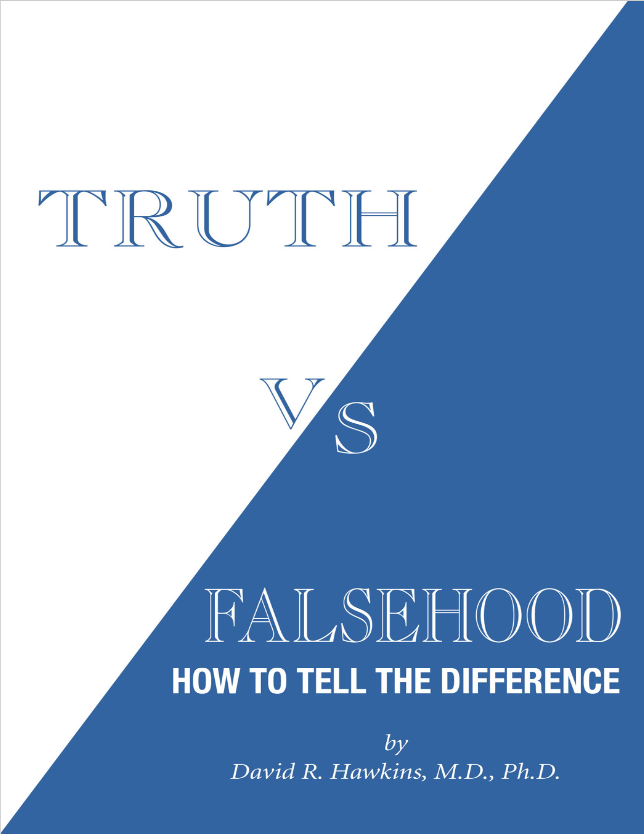
Truth vs. Falsehood How to Tell the Difference PDF - ديفيد هوكينز
ديفيد هوكينز • التنمية البشرية • ٥٤٩ الصفحات
(0)
المؤلف
ديفيد هوكينزالفئة
علوم اجتماعيةالقسم
عدد التنزيلات
٨١
عدد القراءات
٢٤٩
حجم الملف
4.29 MB
المشاهدات
٢٬٥٧٩
اقتباس
مراجعة
حفظ
مشاركة
وصف الكتاب
Truth vs. Falsehood: How to Tell the Difference by David R. Hawkins is a profound and challenging work for readers interested in consciousness, spiritual discernment, truth, integrity, and the nature of human perception. In this book, Hawkins explores one of the most important questions faced by individuals and societies alike: how can we distinguish what is true from what is false when the human mind is often shaped by opinion, emotion, conditioning, belief systems, and social influence? Rather than treating truth as a simple matter of argument or personal preference, the book presents truth as something connected to consciousness, inner alignment, and the capacity to perceive reality beyond the distortions of the ego.
A Book About Discernment, Consciousness, and Reality
At the center of Truth vs. Falsehood is Hawkins’s continuing exploration of the Map of Consciousness, a framework associated with his wider body of work on spirituality, psychology, and human awareness. Readers familiar with Power vs. Force will recognize many of the themes that Hawkins develops further here, especially the distinction between force, which depends on control and opposition, and power, which arises from truth, integrity, and higher levels of consciousness. This book applies those ideas to the practical and philosophical problem of discernment: how people, cultures, institutions, and belief systems may be evaluated according to their alignment with truth.
Hawkins writes for readers who are not satisfied with surface-level explanations of human conflict, deception, ideology, and confusion. He argues that the ordinary mind is often unable to recognize falsehood reliably because it is influenced by desire, fear, pride, loyalty, resentment, and the need to be right. In this sense, the book is not merely about detecting lies in a conventional sense. It is about understanding why falsehood can appear convincing, why truth can be resisted, and why spiritual growth requires humility, courage, and a willingness to surrender personal positionalities.
The Search for Truth Beyond Opinion
One of the most compelling aspects of Truth vs. Falsehood: How to Tell the Difference is its focus on the difference between intellectual argument and deeper knowing. Hawkins approaches truth as more than factual correctness; he connects it with consciousness, moral alignment, and the capacity to perceive reality without distortion. This makes the book especially relevant for readers searching for spiritual books about truth, books on consciousness, self-inquiry books, and works that examine how perception shapes human experience.
The book invites readers to reflect on the limits of personal opinion. In Hawkins’s view, people often mistake strong belief for truth, emotional certainty for wisdom, and collective agreement for reality. This is why falsehood can become socially powerful even when it lacks integrity. Through his analysis, Hawkins encourages the reader to move beyond reactive judgment and toward a more disciplined form of awareness. The result is a reading experience that is contemplative, demanding, and often provocative, especially for those interested in the relationship between spirituality and discernment.
A Spiritual and Philosophical Reading Experience
This is not a light introduction to personal development. Truth vs. Falsehood is a dense, reflective, and conceptually ambitious book that combines spiritual teaching, metaphysical inquiry, applied consciousness research, and social commentary. Hawkins examines truth and falsehood across many areas of human life, including belief, culture, leadership, religion, media, history, morality, and personal conduct. Readers should expect a book that asks for patience and openness, particularly because Hawkins’s language and worldview are rooted in his distinctive approach to consciousness calibration and spiritual evolution.
For many readers, the value of the book lies in its ability to reframe confusion. Instead of seeing conflict only as disagreement between competing opinions, Hawkins suggests that much of human suffering arises from identification with lower levels of consciousness and ego-based positionality. When the mind becomes attached to being right, defending an identity, or preserving an emotional stance, it loses the capacity to recognize truth clearly. The book therefore becomes a guide not only to discernment but also to inner purification, because the ability to know truth is linked to the willingness to let go of pride, fear, anger, and resistance.
Why This Book Appeals to Readers of David R. Hawkins
Readers of David R. Hawkins often come to his work because they are looking for a bridge between spirituality and psychology, or between mystical insight and practical human transformation. Truth vs. Falsehood: How to Tell the Difference speaks directly to that audience. It offers a structured way to think about integrity, consciousness, and the consequences of aligning with truth rather than illusion. Those who appreciate Hawkins’s earlier books will find here a broader application of his ideas, especially in relation to collective life and the difficulty of navigating a world filled with persuasive but conflicting claims.
The book is also valuable for readers who want a deeper understanding of Hawkins’s views on the ego. In many spiritual traditions, the ego is described as the source of illusion, separation, and suffering. Hawkins develops this idea through the lens of discernment, showing how egoic perception can distort reality at both personal and collective levels. The reader is encouraged to examine not only external falsehood but also inner self-deception. This makes the book relevant for anyone interested in spiritual growth, self-awareness, nonduality, truth-seeking, and the disciplined practice of inner honesty.
Who Should Read Truth vs. Falsehood?
Truth vs. Falsehood is best suited for thoughtful readers who enjoy books that combine spiritual philosophy with a broad examination of human behavior. It will appeal to those who are already interested in consciousness studies, metaphysics, spiritual psychology, and the question of how truth can be recognized in a world of competing narratives. It is also a meaningful choice for readers who feel overwhelmed by information, ideology, social conflict, or moral uncertainty and want a deeper framework for understanding why discernment is so difficult.
The book may also speak to readers who are exploring the connection between truth and personal transformation. Hawkins does not present truth as something distant or abstract; he connects it to daily life, intention, humility, and the quality of one’s inner state. For this reason, the book can be read as both a philosophical investigation and a spiritual practice. It challenges readers to ask whether they are truly seeking truth or merely seeking confirmation of what they already believe.
A Deeper Look at Integrity and Inner Alignment
A major strength of Truth vs. Falsehood: How to Tell the Difference is its insistence that discernment begins within. Hawkins repeatedly points toward integrity as a foundation for recognizing truth. Without integrity, the mind can rationalize almost anything; with integrity, the reader becomes more capable of seeing through distortion, manipulation, and self-deception. This makes the book especially useful for readers interested in ethical living, conscious decision-making, and the spiritual consequences of one’s choices.
The book’s title may suggest a simple method for identifying true and false statements, but the deeper purpose is more transformative. Hawkins is concerned with the evolution of consciousness itself. To tell the difference between truth and falsehood, the reader must become less attached to egoic certainty and more aligned with humility, surrender, and devotion to reality as it is. This gives the book a serious and contemplative tone, making it suitable for readers who want more than quick answers or simplified advice.
An Important Work for Serious Seekers
Truth vs. Falsehood is a book for serious seekers—readers who are willing to question perception, examine belief, and consider the possibility that truth requires a higher level of consciousness than ordinary reasoning alone can provide. Whether approached as part of David R. Hawkins’s larger body of work or as a standalone exploration of discernment, the book offers a distinctive perspective on one of the central challenges of human life: learning to recognize what is real, what is aligned with integrity, and what leads away from confusion and suffering.
For readers drawn to David R. Hawkins books, spiritual discernment, truth and consciousness, and the search for a more reliable way to understand reality, Truth vs. Falsehood: How to Tell the Difference provides a demanding but rewarding reading experience. It is a work that encourages reflection, challenges assumptions, and invites the reader to approach truth not as a weapon in debate, but as a path toward greater awareness, responsibility, and inner freedom.
ديفيد هوكينز
الدكتور ديفيد ر. هوكينز هو ديفيد رامون هوكينز، طبيب نفسي وطبيب وباحث ومحاضر ومؤلف أمريكي في مجالات الوعي والروحانية والتنمية الداخلية، اشتهر عالميًا بكتابيه «القوة في مواجهة الإكراه: المحددات الخفية للسلوك الإنساني» و**«التخلي: طريق التسليم». وُلِد في ميلووكي بولاية ويسكونسن في 3 يونيو 1927، وتوفي في سيدونا بولاية أريزونا في 19 سبتمبر 2012، وقد جمع في مسيرته بين الطب النفسي السريري والكتابة الروحية ومحاولة بناء لغة تربط بين التجربة الداخلية والسلوك الإنساني. تشير سيرته الرسمية إلى أنه عمل مديرًا طبيًا لمركز North Nassau Mental Health Center بين عامي 1956 و1980، ومديرًا للأبحاث في Brunswick Hospital بين عامي 1968 و1979، وهي مرحلة منحت كتاباته خلفية إكلينيكية واضحة في التعامل مع الألم النفسي، الإدمان، القلق، الصراع الداخلي، وأسئلة الشفاء العاطفي. كما شارك عام 1973 مع العالم الحائز على نوبل لينوس بولنغ في تأليف كتاب Orthomolecular Psychiatry، وهو عمل ارتبط بمرحلة من الاهتمام بالعلاج النفسي والبيولوجيا والتغذية ضمن سياقات طبية وفكرية واسعة. يقدّم هوكينز في كتبه أسلوبًا يجمع بين اللغة التأملية والتحليل النفسي والفلسفة الدينية، لذلك يجد قراؤه في أعماله مادة تناسب الباحثين عن كتب الوعي، كتب الشفاء الداخلي، كتب الروحانية العملية، كتب التأمل، وكتب تطوير الذات العميقة. في «القوة في مواجهة الإكراه» يطرح فكرته عن خريطة الوعي باعتبارها إطارًا رمزيًا لفهم انتقال الإنسان من الخوف والذنب والغضب إلى الشجاعة والحب والسلام، مع التأكيد على أن هذا الإطار ينتمي إلى منظومته الفكرية والروحية الخاصة، ولا ينبغي التعامل معه كبديل عن الطب أو العلاج النفسي المتخصص. أما في «التخلي: طريق التسليم» فيركّز على آلية ترك المقاومة الداخلية والسماح للمشاعر بأن تُرى وتتحرر دون قمع أو تبرير، ولهذا أصبح الكتاب من أكثر أعماله حضورًا بين قراء التنمية الروحية والشفاء العاطفي. تمتاز كتابة ديفيد ر. هوكينز بنبرة تعليمية هادئة، وبمحاولة مستمرة لتبسيط قضايا معقدة مثل الأنا، الوعي، الحقيقة، المعاناة، الصفح، الصلاة، المحبة، والطمأنينة. ومن أعماله المعروفة أيضًا The Eye of the I، وI: Reality and Subjectivity**، وTruth vs. Falsehood، وTranscending the Levels of Consciousness، وHealing and Recovery، وهي كتب تواصل مشروعه في شرح مسار التحول الداخلي والبحث عن معنى روحي للحياة اليومية. أسّس هوكينز Institute for Spiritual Research عام 1983، كما أسّس Path of Devotional Nonduality عام 2003، وتذكر سيرته أنه حاضر في مؤسسات ومراكز متعددة، وأن أعماله تُرجمت إلى لغات عديدة وجذبت جمهورًا واسعًا من القراء والباحثين عن المعنى. وبالنسبة إلى موقع كتب، يمكن تقديم ديفيد ر. هوكينز بوصفه مؤلفًا مؤثرًا في تقاطع الطب النفسي والروحانية الحديثة، وكاتبًا يهم القراء الذين يبحثون عن فهم النفس، تحرير المشاعر، الوعي، السلام الداخلي، والمعنى الأعمق للسلوك الإنساني.
اكسب مكافآت أثناء القراءة!
كل 10 صفحات تقرؤها وتقضى فيها 30 ثانية تمنحك 5 نقاط مكافأة! واصل القراءة لفتح الإنجازات والمزايا الحصرية.
اقرأ
قيم الآن
5 نجوم
4 نجوم
3 نجوم
2 نجوم
1 نجوم
اقتباسات Truth vs. Falsehood How to Tell the Difference
الأعلى تقييماً
الأحدث
اقتباس
كن أول من يترك اقتباسًا واكسب 10 نقاط
بدلاً من 3
كتب أخرى لـ ديفيد هوكينز
'%20/%3e%3c/svg%3e "The Eye of the I: From Which Nothing is Hidden")
ديفيد هوكينز.
التنمية البشرية
(0)
6546
الإنجليزية
التعليقات
كن أول من يترك تعليقًا واكسب 5 نقاط
بدلاً من 3