

مصدر الكتاب
تم نشر هذا الكتاب بهدف النفع العام، وذلك بموجب رخصة المشاع الإبداعي، أو بناءً على موافقة من المؤلف أو دار النشر. في حال وجود أي اعتراض على النشر، يُرجى التواصل معنا لنتخذ الإجراء المناسب.
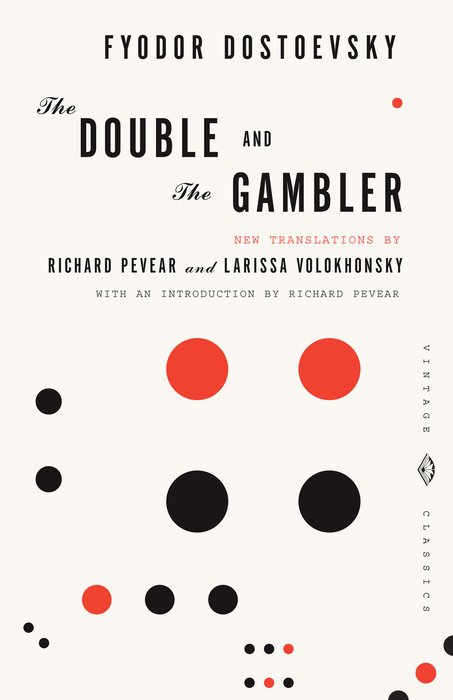
The Double and the Gambler PDF - فيودور دوستويفسكي
فيودور دوستويفسكي • روايات أدبية • ٢٧٥ الصفحات
(0)
اقتباس
مراجعة
حفظ
مشاركة
وصف الكتاب
The Double and The Gambler by Fyodor Dostoevsky
The Double and The Gambler brings together two compact yet powerful works by Fyodor Dostoevsky, one of the most searching psychological writers in world literature. In these two short novels, Dostoevsky explores fractured identity, obsession, humiliation, desire, social anxiety, and the dangerous thrill of risk with the intensity that made his major novels enduring classics. Though shorter than works such as Crime and Punishment, The Idiot, and The Brothers Karamazov, these stories contain the same unsettling depth, moral tension, and dramatic insight that define Dostoevsky’s fiction.
This volume offers readers a concentrated encounter with Dostoevsky’s early and middle creative power. The Double is a darkly comic and disturbing story of a minor civil servant whose ordinary life begins to collapse when he encounters a man who looks exactly like him. The Gambler is a tense psychological novel centered on roulette, romantic dependence, financial desperation, and the feverish atmosphere of a European gambling resort. Together, the two works reveal Dostoevsky’s extraordinary ability to turn inner conflict into gripping narrative drama.
A Classic Study of Identity, Obsession, and Inner Division
In The Double, Dostoevsky introduces Yakov Petrovich Golyadkin, a socially awkward government clerk in St. Petersburg whose sense of self is already fragile before the impossible happens: another Golyadkin appears. This double shares his name, face, and social world, yet seems smoother, more confident, more adaptable, and more capable of winning the approval that the original Golyadkin desperately wants. What begins as a strange encounter becomes a nightmarish struggle over identity, reputation, and psychological survival.
The brilliance of The Double lies in the way Dostoevsky keeps the reader close to Golyadkin’s disturbed perceptions. The story is not simply about a mysterious lookalike; it is about the terror of being replaced, mocked, exposed, and divided against oneself. Readers interested in psychological fiction, Russian literature, doppelgänger stories, and early modern explorations of alienation will find in this novella a striking anticipation of themes later associated with Kafka, existential literature, and modern psychological narrative.
The Dangerous Allure of Chance in The Gambler
The Gambler moves from the bureaucratic rooms of St. Petersburg to the charged atmosphere of a European resort town, where money, pride, romance, and roulette spin around one another with increasing speed. The narrator, Alexei Ivanovich, is a tutor attached to a Russian family whose fortunes and emotions are tied to expectation, debt, inheritance, and social appearance. Around him, characters calculate, hope, manipulate, desire, and lose control as the casino becomes both a literal setting and a symbol of human compulsion.
Dostoevsky portrays gambling not merely as a habit but as a state of mind. Roulette becomes a dramatic expression of risk, humiliation, defiance, and longing. The gambler does not only want money; he wants transformation, proof, revenge, recognition, and escape from ordinary limits. This is why The Gambler remains one of the most compelling literary studies of addiction and obsession. It captures the emotional rhythm of anticipation, the shock of loss, the intoxication of winning, and the irrational belief that one more turn may change everything.
Dostoevsky’s Psychological Depth in a Shorter Form
For readers new to Fyodor Dostoevsky, this collection is an excellent entry point because it presents many of his essential concerns in a more compact form. The characters in The Double and The Gambler are not heroic in a conventional sense. They are anxious, proud, wounded, impulsive, and often painfully self-aware. Dostoevsky’s genius is that he does not reduce them to simple moral examples. Instead, he allows their contradictions to unfold in scenes filled with tension, irony, embarrassment, and emotional urgency.
Both works show Dostoevsky’s fascination with people standing on the edge of collapse. In The Double, the crisis is inward and hallucinatory, shaped by paranoia and the fear of social erasure. In The Gambler, the crisis is outwardly dramatic but equally psychological, shaped by money, desire, and the compulsion to risk everything. Read together, the two novels create a powerful portrait of human beings trapped between pride and shame, freedom and dependency, reason and impulse.
Themes That Make the Book Enduring
One of the central themes of The Double and The Gambler is the instability of identity. Dostoevsky repeatedly asks what happens when a person’s image of himself no longer matches how others see him, or when the desire to be admired becomes inseparable from the fear of being humiliated. Golyadkin’s double represents more than a supernatural or surreal device; he embodies the painful split between the self one is and the self one wishes to become.
Another important theme is obsession. In The Gambler, obsession takes the form of roulette, but it also appears in love, status, inheritance, and power. Characters are drawn toward what may destroy them because destruction seems preferable to emptiness or insignificance. Dostoevsky understands that obsession often disguises itself as hope. His characters tell themselves they are making choices, yet the reader feels how strongly they are driven by forces they barely understand.
The collection also explores social pressure and humiliation. Dostoevsky’s characters are intensely aware of rank, money, reputation, and public judgment. A glance, a conversation, a failed social performance, or a financial loss can become spiritually catastrophic. This sensitivity gives the stories their uncomfortable realism, even when the events themselves become strange or extreme. Dostoevsky reveals how much of human behavior is shaped by the need to be seen, accepted, and valued.
A Rich Reading Experience for Lovers of Russian Classics
The Double and The Gambler is especially rewarding for readers who enjoy classic literature, Russian novels, philosophical fiction, and stories that examine the darker movements of the mind. The book does not depend on large external plots or elaborate adventure. Its power comes from psychological pressure, dramatic dialogue, inner contradiction, and the gradual exposure of characters who are both ridiculous and deeply human.
The tone shifts across the two works in fascinating ways. The Double often feels claustrophobic, absurd, and uncanny, as if the ordinary world has become a distorted mirror. The Gambler is faster, sharper, and more socially dynamic, filled with emotional bargaining and the suspense of chance. Yet both works share Dostoevsky’s unmistakable intensity: every scene seems to press toward a revelation about weakness, pride, freedom, or self-deception.
Why This Edition Belongs on a Classic Literature Shelf
As a combined volume, The Double and The Gambler offers a meaningful view of Dostoevsky’s development as a writer. These works show his movement from early experiments in psychological doubling and social satire toward the mature investigations of compulsion, moral crisis, and spiritual unrest that would shape his greatest novels. They are shorter works, but they are not minor in insight. Each contains a world of anxiety, desire, and conflict compressed into a form that remains vivid and memorable.
Readers studying Dostoevsky will find this book valuable for understanding recurring ideas that echo throughout his fiction: divided consciousness, irrational action, the burden of freedom, the humiliation of poverty, the seduction of risk, and the unstable boundary between self-knowledge and self-delusion. General readers will find two gripping stories that remain accessible because their emotional concerns are still recognizable. The fear of being replaced, the hunger to be respected, the temptation to gamble on one impossible chance, and the struggle to understand one’s own motives are not confined to nineteenth-century Russia; they remain deeply modern experiences.
A Powerful Pairing from a Master of Psychological Fiction
The Double and The Gambler by Fyodor Dostoevsky is a compelling collection for anyone seeking a concentrated dose of literary intensity, psychological insight, and classic Russian storytelling. Through the uncanny nightmare of The Double and the feverish suspense of The Gambler, Dostoevsky examines the hidden pressures that drive people toward confusion, obsession, and self-destruction. The result is a book that feels both historically important and emotionally immediate.
This volume stands as an ideal choice for readers interested in Dostoevsky books, Russian classic fiction, psychological novels, existential literature, and stories about identity, addiction, pride, and inner conflict. It offers two distinct but connected portraits of human instability: one shaped by the terror of a divided self, the other by the intoxicating promise of chance. Together, they reveal why Dostoevsky continues to be read not only as a great novelist, but as one of literature’s most penetrating observers of the human soul.
فيودور دوستويفسكي
كان فيودور دوستويفسكي روائيًا وفيلسوفًا وكاتب مقالات روسيًا ، ويُعتبر على نطاق واسع أحد أعظم الكتاب في الأدب الغربي. ولد في موسكو عام 1821 ونشأ في عائلة من الطبقة المتوسطة. كان والده طبيبًا يعالج الفقراء مجانًا ، الأمر الذي غرس في دوستويفسكي إحساسًا عميقًا بالعدالة الاجتماعية والتعاطف مع المضطهدين.
بدأ دوستويفسكي مسيرته الكتابية في أربعينيات القرن التاسع عشر بسلسلة من الروايات والقصص القصيرة التي استكشفت تعقيدات الطبيعة البشرية والجانب المظلم للمجتمع الروسي. نُشرت روايته الرئيسية الأولى "فقراء" عام 1846 وحظيت بإشادة النقاد. ومع ذلك ، كانت أعماله اللاحقة ، مثل "الجريمة والعقاب" و "الأبله" و "الأخوان كارامازوف" ، هي التي جعلت منه أستاذًا أدبيًا.
تشتهر كتابات دوستويفسكي بعمقها النفسي وموضوعاتها الفلسفية واستكشاف حالة الإنسان. غالبًا ما تصارع شخصياته مع المعضلات الأخلاقية والأسئلة الوجودية ، وتتصارع مع قضايا الإيمان والأخلاق ومعنى الحياة. تستكشف أعماله أيضًا القضايا السياسية والاجتماعية في عصره ، بما في ذلك الفقر والجريمة والقمع السياسي.
اتسمت حياة دوستويفسكي بمأساة شخصية واضطراب سياسي. تم القبض عليه في عام 1849 لتورطه مع مجموعة من المثقفين الليبراليين وحُكم عليه بالإعدام ، فقط لتخفف العقوبة إلى الأشغال الشاقة في سيبيريا. عاد إلى روسيا بعد أن قضى عقوبته ، لكنه استمر في النضال ضد الفقر والمرض طوال حياته. توفي عام 1881 عن عمر يناهز 59 عامًا.
على الرغم من حياته المضطربة ، فإن إرث دوستويفسكي ككاتب ومفكر لا يزال قائما. تستمر أعماله في القراءة والدراسة على نطاق واسع اليوم ، ولا تزال أفكاره حول الحالة الإنسانية ودور الإيمان في المجتمع تلقى صدى لدى القراء في جميع أنحاء العالم.
اكسب مكافآت أثناء القراءة!
كل 10 صفحات تقرؤها وتقضى فيها 30 ثانية تمنحك 5 نقاط مكافأة! واصل القراءة لفتح الإنجازات والمزايا الحصرية.
اقرأ
قيم الآن
5 نجوم
4 نجوم
3 نجوم
2 نجوم
1 نجوم
اقتباسات The Double and the Gambler
الأعلى تقييماً
الأحدث
اقتباس
كن أول من يترك اقتباسًا واكسب 10 نقاط
بدلاً من 3
'%20/%3e%3c/svg%3e "The Brothers Karamazov")
التعليقات
كن أول من يترك تعليقًا واكسب 5 نقاط
بدلاً من 3